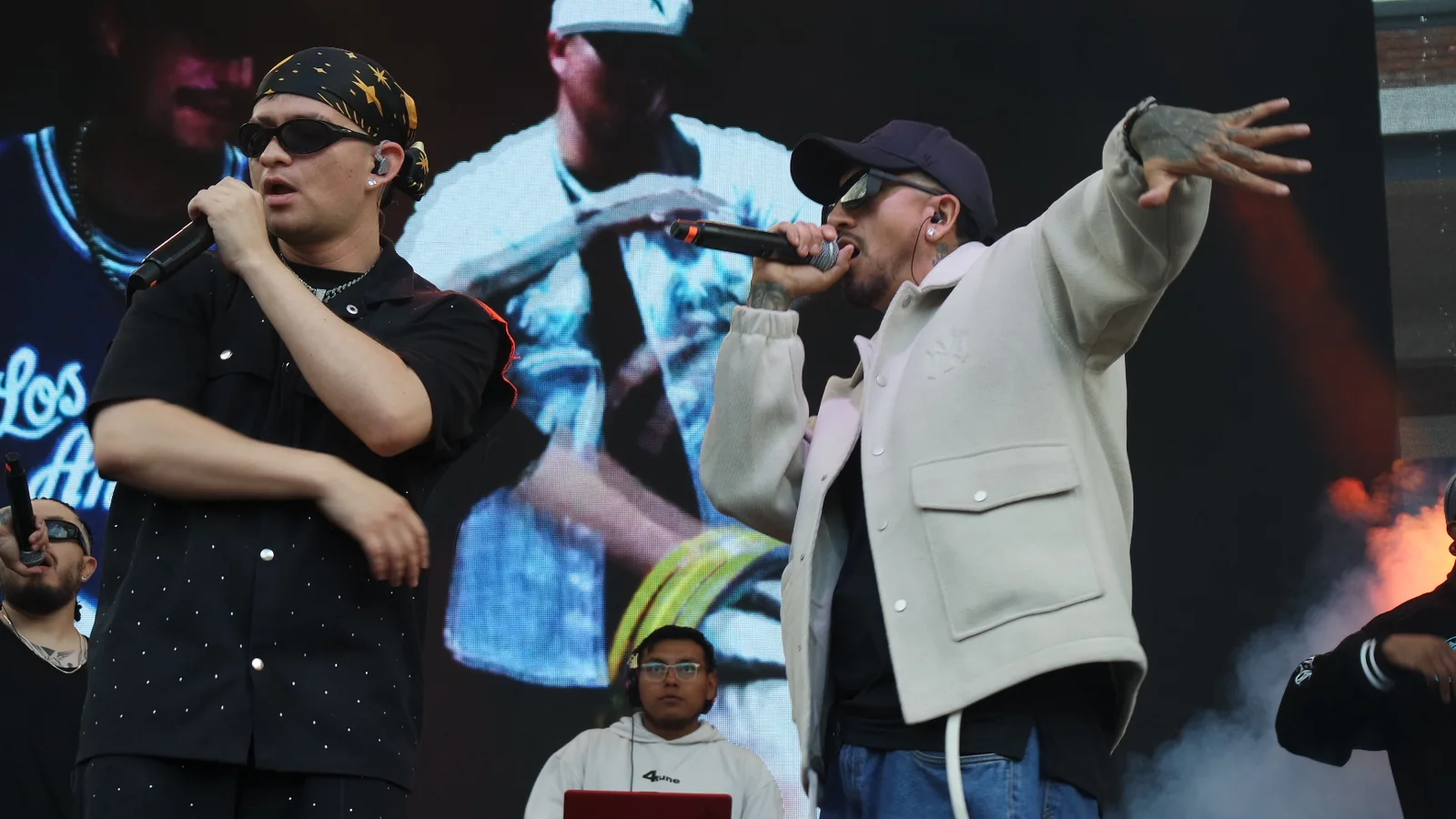
Thanks to the Luna Hiena team, I had the opportunity to attend KulturURBANA 2026 and witness an incredible range of talent at Quito’s Plaza Belmonte. I met artists including Gary Galáctico, Rock Party Band, Vittorio, Music Empire —a rock band from the German School in Quito—, Mad Instruments and Mel Mourelle. Each brought something different to the stage and reminded me how much talent our local music scene has to offer.
I brought my camera to capture what was happening both onstage and around it. Between performances, conversations and spontaneous moments, I put together the photographs in this story. I wanted to share them and, above all, name the people who made that day memorable. My thanks also go to everyone who creates and supports spaces for culture.
KulturURBANA was presented by the Embassy of the Federal Republic of Germany in Quito, with production support from Luna Hiena. The festival brought music, urban art and other cultural expressions to Plaza Belmonte on October 31, November 7 and November 14, 2026, with free admission.
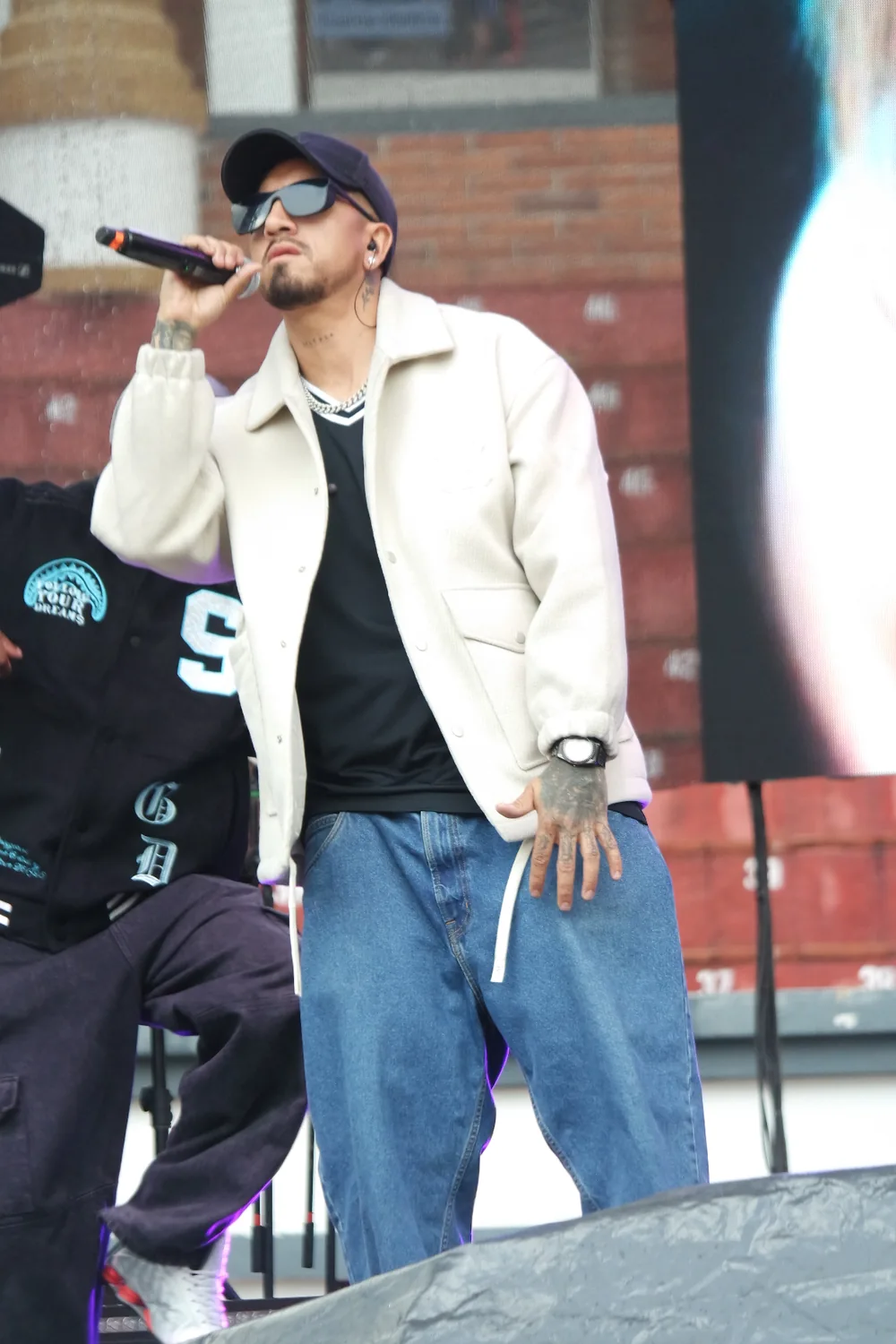
QUIRO (@quiro_rec), photographed by Edge Marketing Agency during KulturURBANA 2026.
The artists documented by Edge Journal
Gary Galáctico and Mel Mourelle are among the names identified in the coverage. Gary Galáctico’s musical work brings jazz and hip-hop into conversation; Mel Mourelle is an Ecuadorian singer-songwriter active in Quito’s music scene. Their presence reflects the range of musical languages represented at the event.
The archive also identifies Rock Party Band, Vittorio and Mad Instruments. Naming them matters: a cultural chronicle should preserve who took part, rather than merely describing lights, screens and sound systems. We do not assign songs, performance times or individual portraits without adequate verification.
Music Empire, a rock group from the German School in Quito, deserves special mention. A school-based musical project participating in a cross-cultural festival illustrates how new generations of musicians find space to perform and develop.
The archive also features QUIRO, the artist in the first photograph of this story, who is on Instagram as @quiro_rec. These seven names reflect the performers and projects identified in Edge Marketing Agency’s coverage; they are not an official or exhaustive line-up for the three festival dates.
The linked songs introduce their work through recordings published on the artists’ channels. They are not presented as a reconstruction of the songs performed at the festival.
A public square becomes a meeting place
At KulturURBANA, Plaza Belmonte is more than a concert venue. It brings together artistic expressions that often inhabit separate spaces: independent music rooms, streets, studios, markets and creative communities. Together, they offer another perspective on the city, one where visual arts and music can share a public stage.
The photographs show a substantial performance area, screens, moving performers and the transitions between sets. Those details are a reminder that culture also needs infrastructure: technicians, producers, sound systems, logistics and the teams that sustain a program open to everyone.
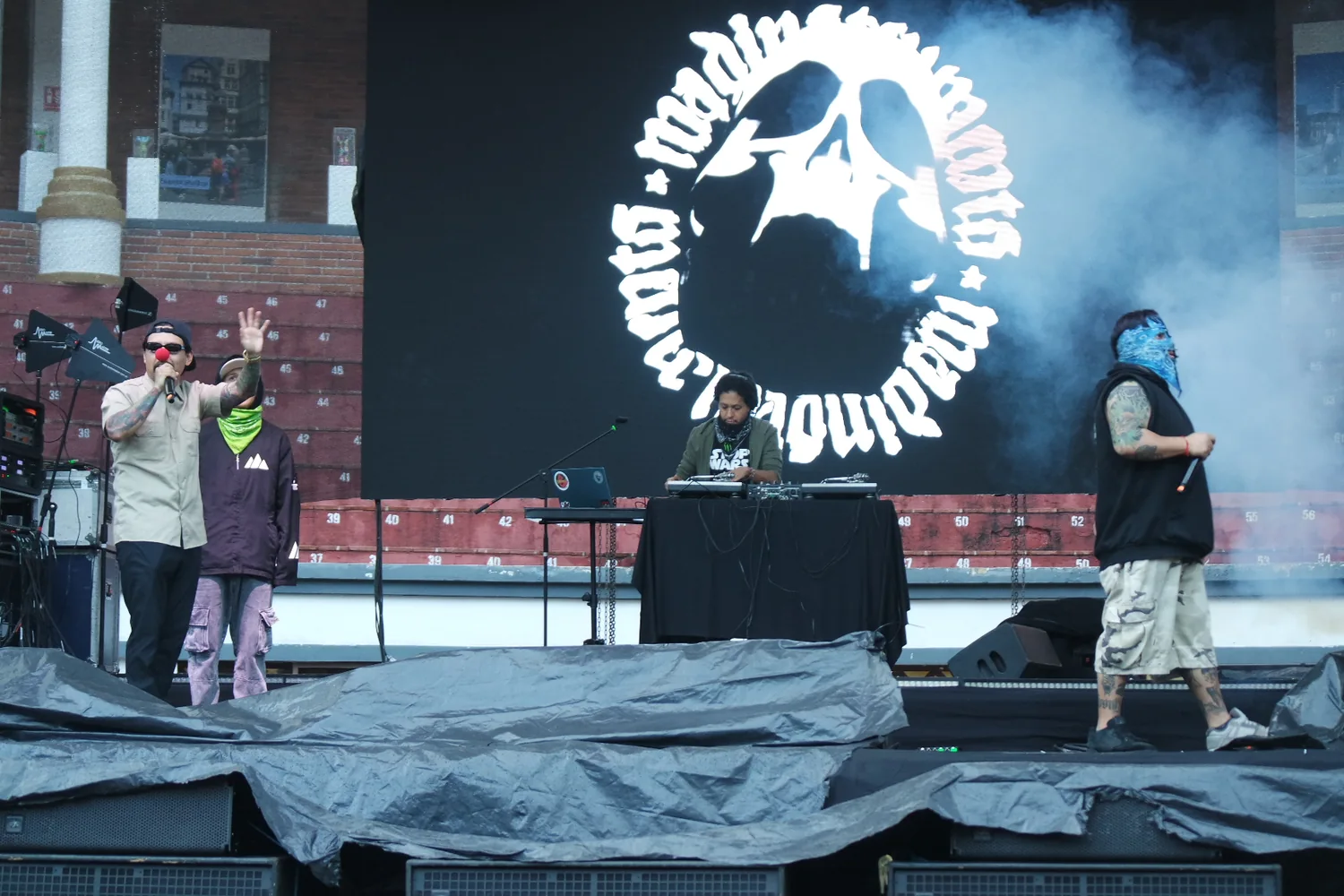
KulturURBANA brings live musical performances to Plaza Belmonte.
Performers at the heart of the photo essay
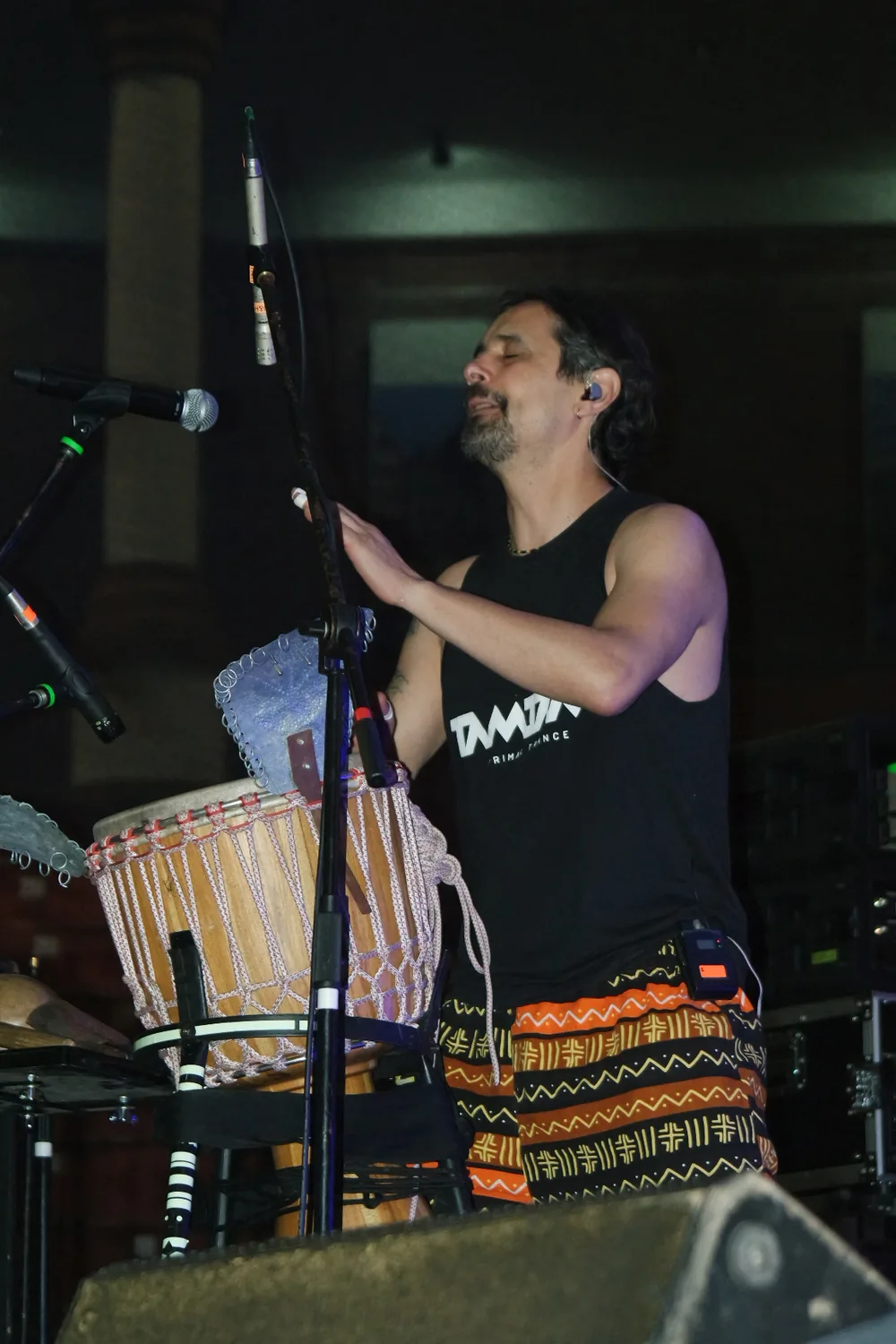
Performances are central to this archive: hands punctuate verses, microphones are held close, instruments fill the stage, and musicians look toward the audience. The camera captures the tension of performance rather than a promotional pose. Naming Gary Galáctico, Rock Party Band, Vittorio, Music Empire, Mad Instruments and Mel Mourelle also preserves the memory of who helped shape the music.
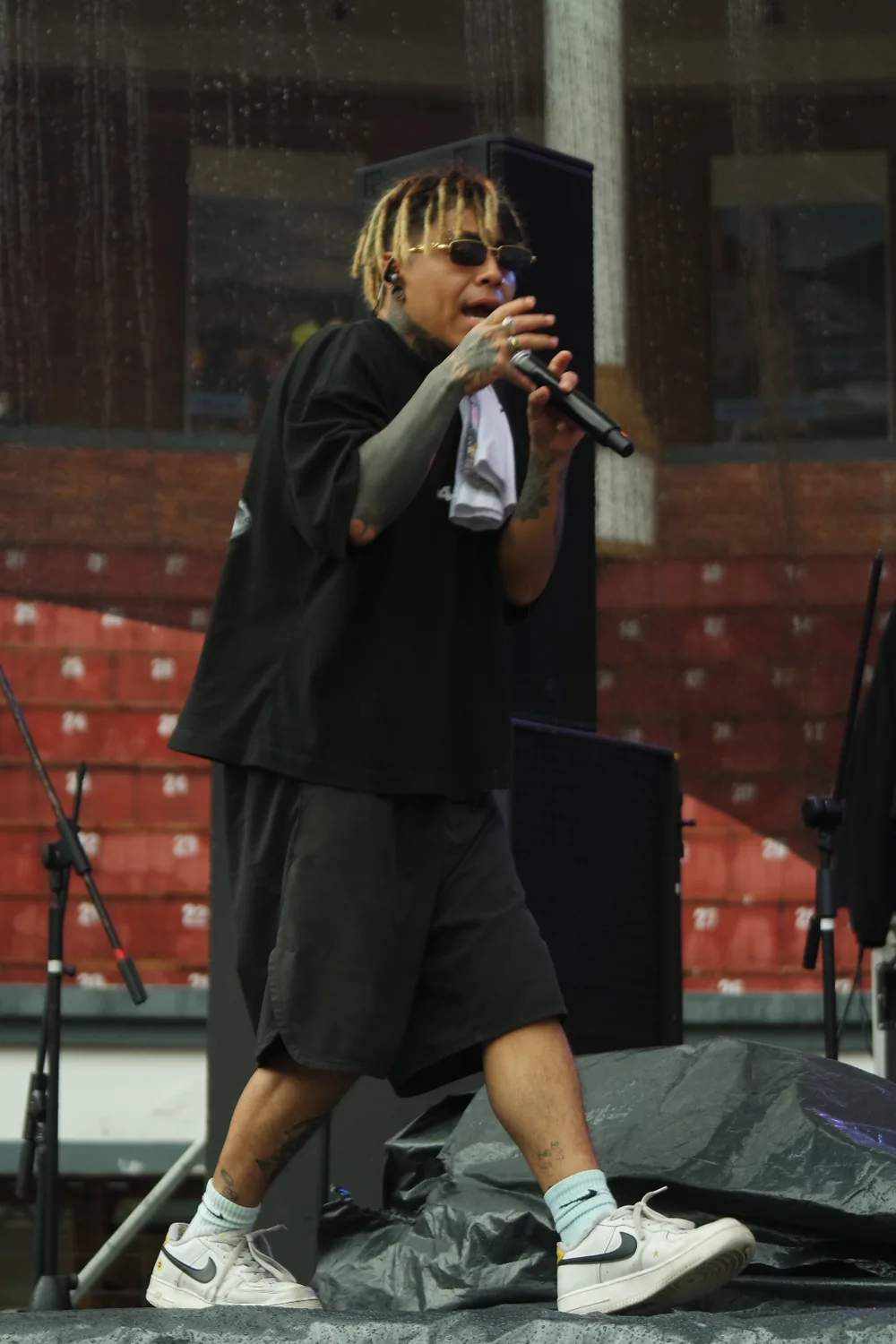
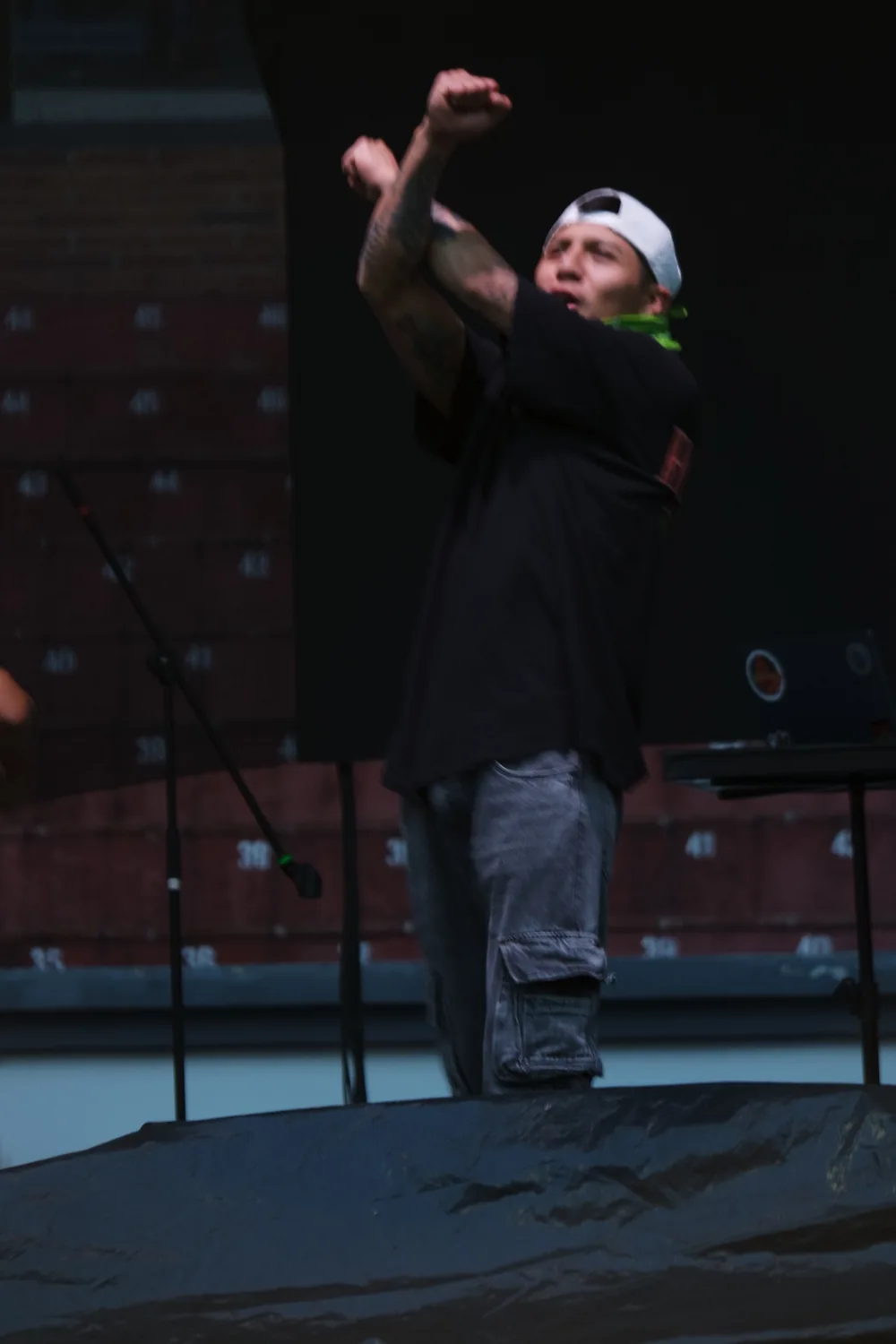
To understand KulturURBANA, it helps to notice the exchange between musical scenes: hip-hop and jazz meet rock, while live performances share a public setting with visual art. That diversity is better understood when its protagonists are named and documentary photos are not mistaken for an official artist catalogue.
Urban culture happens beyond the microphone
Not every photograph of KulturURBANA 2026 features stage lights. In one image, participants talk in front of a colorful wall. In another, food comes into focus. These details may seem small, but they are essential. A cultural festival is shaped by its official program and by everything that happens around it.
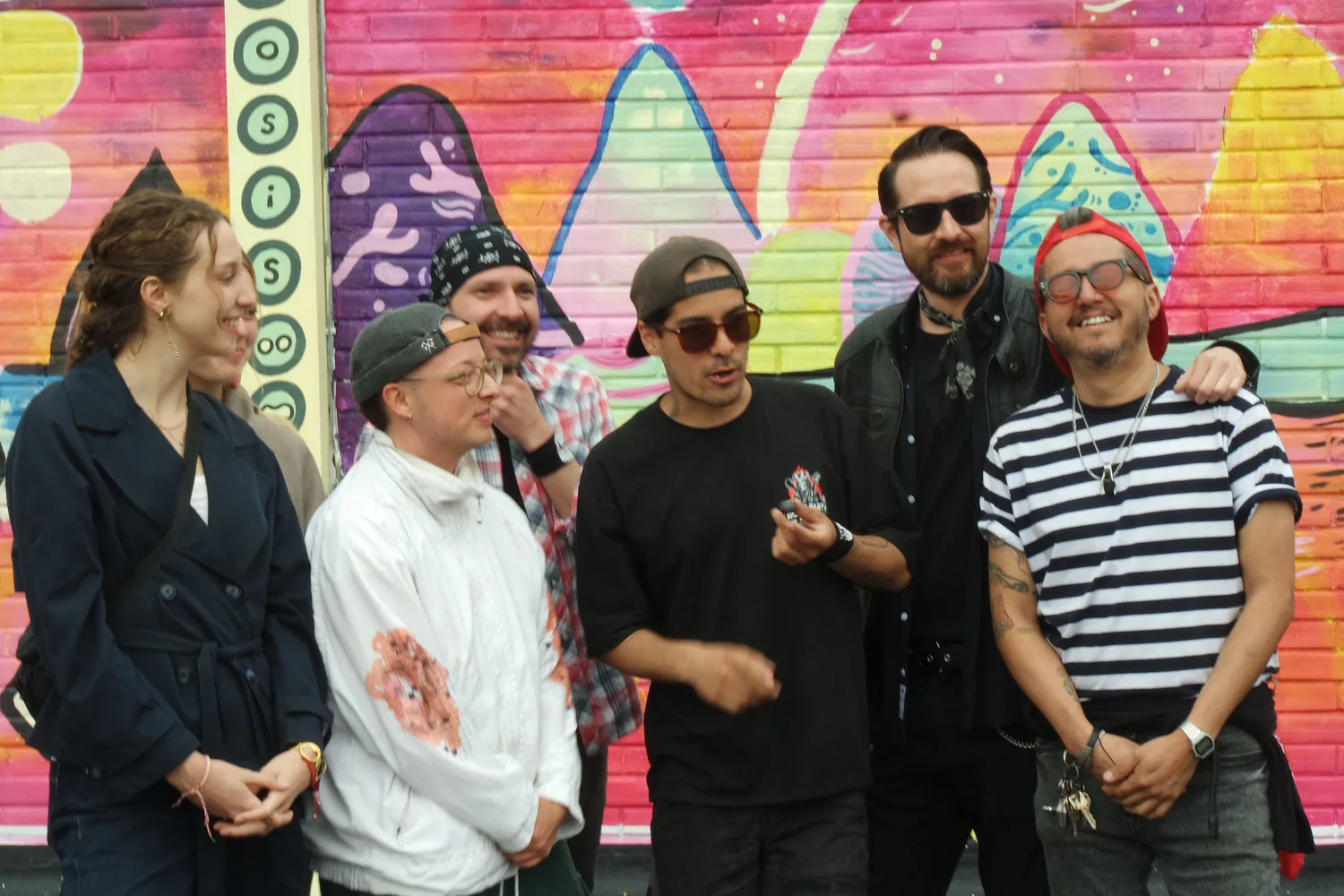
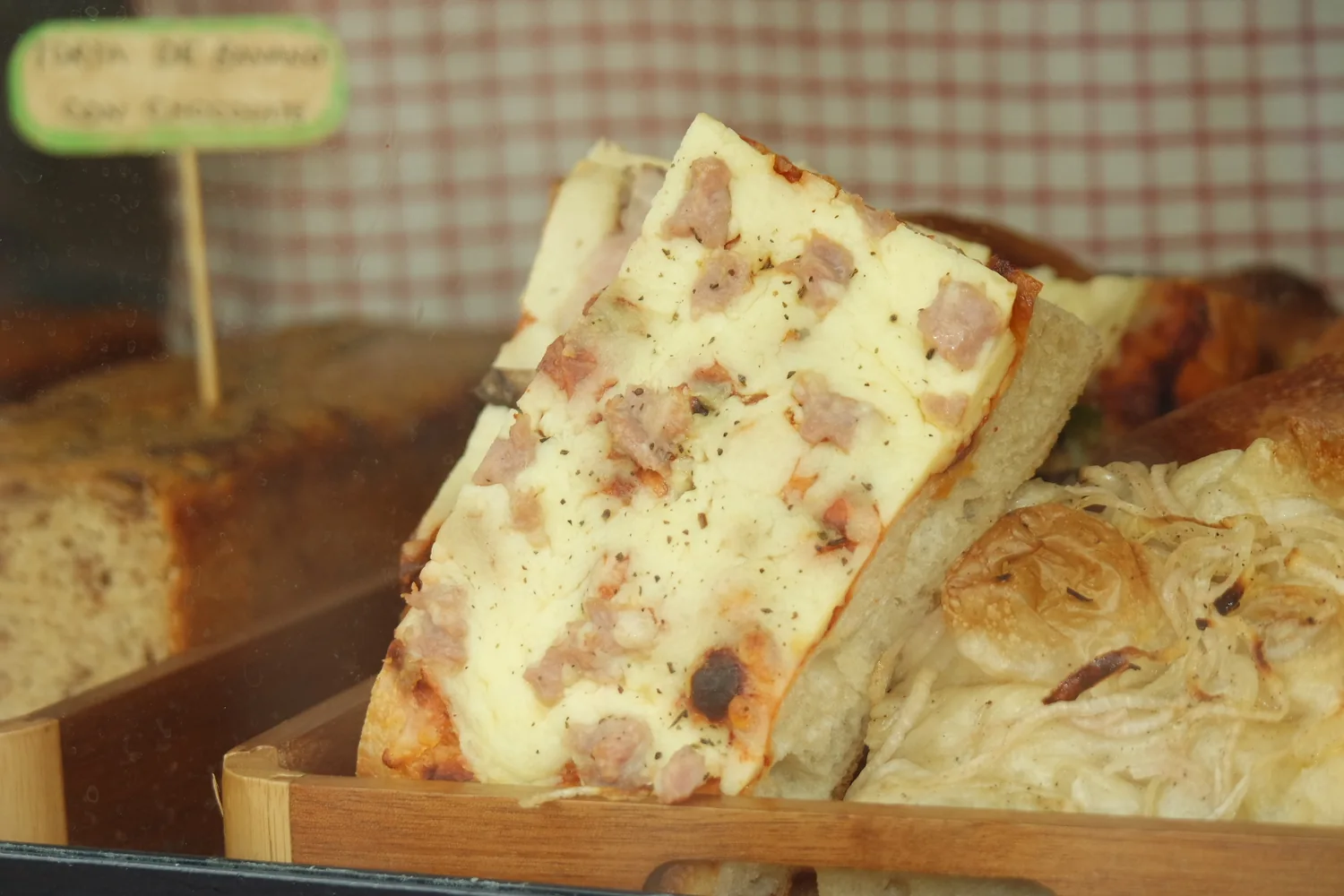
The festival encourages dialogue between contemporary creativity and public space. That conversation includes muralism, food, design, dance and music. It also includes people who are not there for a specific performance, but simply to experience a familiar place transformed for a few hours.
What the camera sees when nobody poses
Another photograph tells its own story: a person wearing a vividly colored scarf looks at a phone as the event continues around them. It is neither a stage photograph nor a group portrait. It is a pause. The image illustrates the value of documentary photography: preserving the in-between moments that a promotional campaign might overlook.
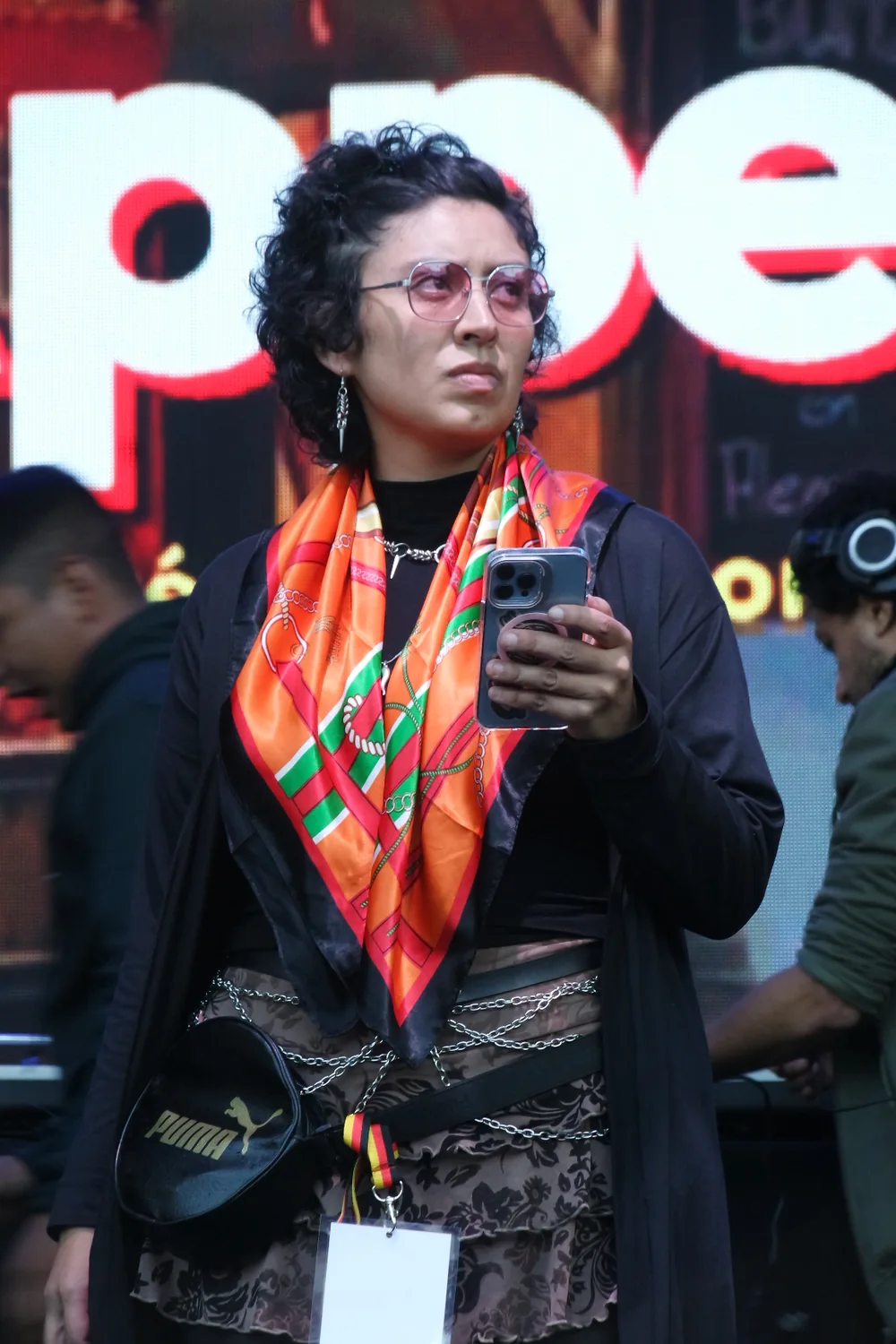
In a city where cultural life competes for space, visibility and resources, KulturURBANA raises a question larger than any single concert: what happens when the street becomes more than a route through the city, and instead becomes a place to meet?
Three festival dates, one lasting record
KulturURBANA took place on October 31, November 7 and November 14, 2026, at Plaza Belmonte (Antepara 407 and Vicente León, Quito), with free admission. The program included music, urban art, dance, design and food. The Humboldt Association published the event details and highlighted German muralist ROMOKO (Robin Kowalewsky), who is based in Chile.
The photographs in this essay come from one of the festival days covered by Edge Marketing Agency. The musical projects named above were identified through the editorial records of that coverage. The photographs are not presented as individually verified portraits, nor do we claim every artist appeared on the same date.
The value of this archive lies in its accuracy: preserving photographs, crediting artists by name and helping readers discover the people who took to the stage at KulturURBANA 2026.
Credits: an initiative of the Embassy of the Federal Republic of Germany in Quito, with production support from the Luna Hiena team. Photography: Edge Marketing Agency archive (SAM_ series, KulturURBANA). Writing and editing: Edge Journal.
Sources: Humboldt Association, KulturURBANA 2026 event information, SAYCE, Gary Galáctico’s musical background, Quito Informa, reference to Mel Mourelle, the linked YouTube channels and Edge Marketing Agency’s photo archive. The seven artists and projects are identified from EMA’s records, not the organiser’s published line-up.